Launch offer — valid today only

📄 Digital book in PDF · read it on your phone or print it

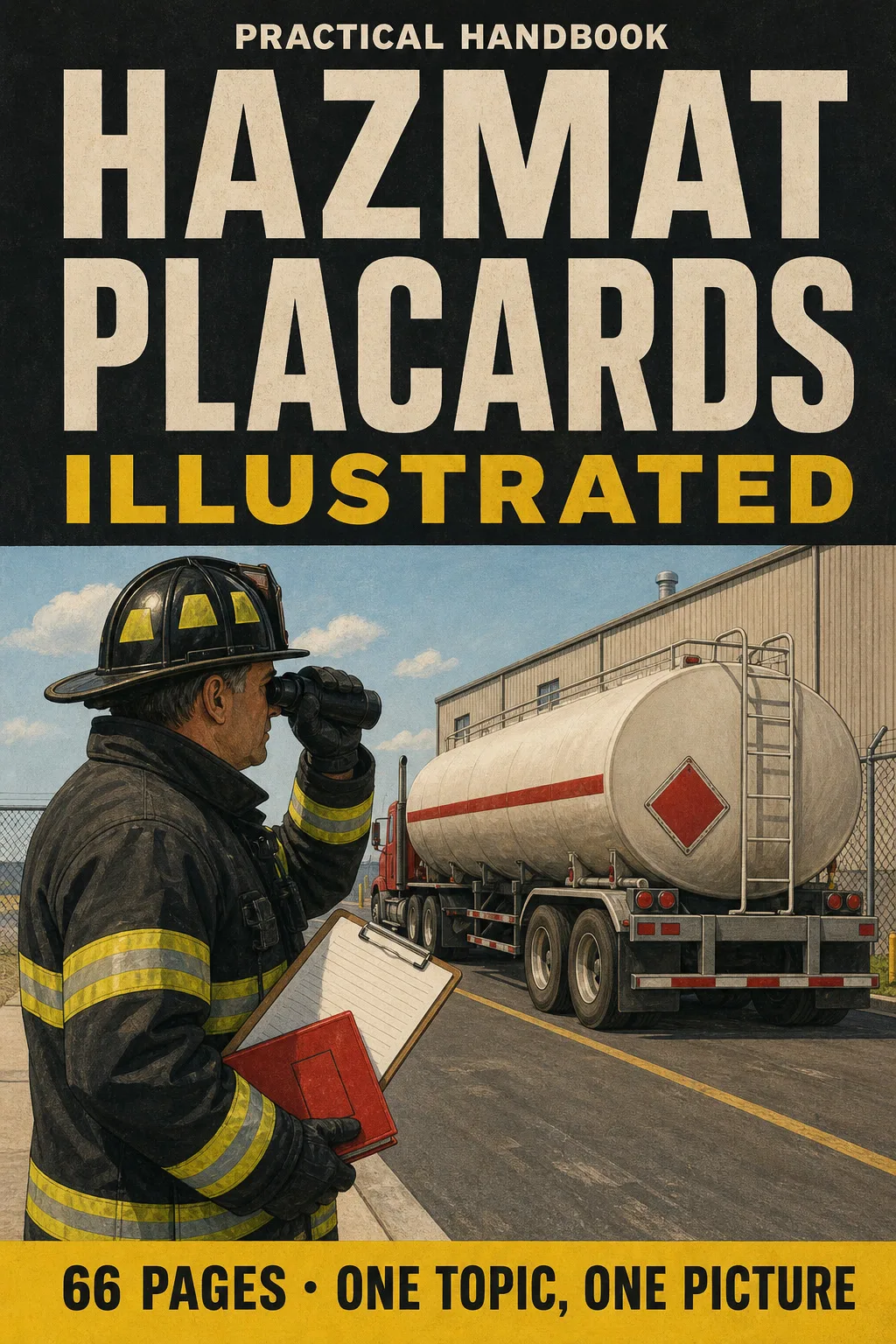
Hazmat Placards and the Emergency Response Guidebook, Illustrated From Placard to Isolation Distance

The 9 hazard classes, 4-digit ID numbers, tank shapes from a distance, shipping papers, the guidebook's colored pages, isolation distances, hot and cold zones and BLEVE warning signs. Each topic has its own page: the drawing first, then what you need to remember. 66 illustrated pages.

YES, I WANT THE 66 ILLUSTRATED PAGES

🔒 Secure checkout · PDF by email · 30-day guarantee
Every topic, its own pageEvery placard and tank drawn, with the explanation beside it
66 illustrated pages66 illustrated pages in 9 parts, one topic per page
Up-to-date sourcesERG2024 (PHMSA/DOT) and 49 CFR Parts 172–173
PDF by emailFormat

Look Inside the Book

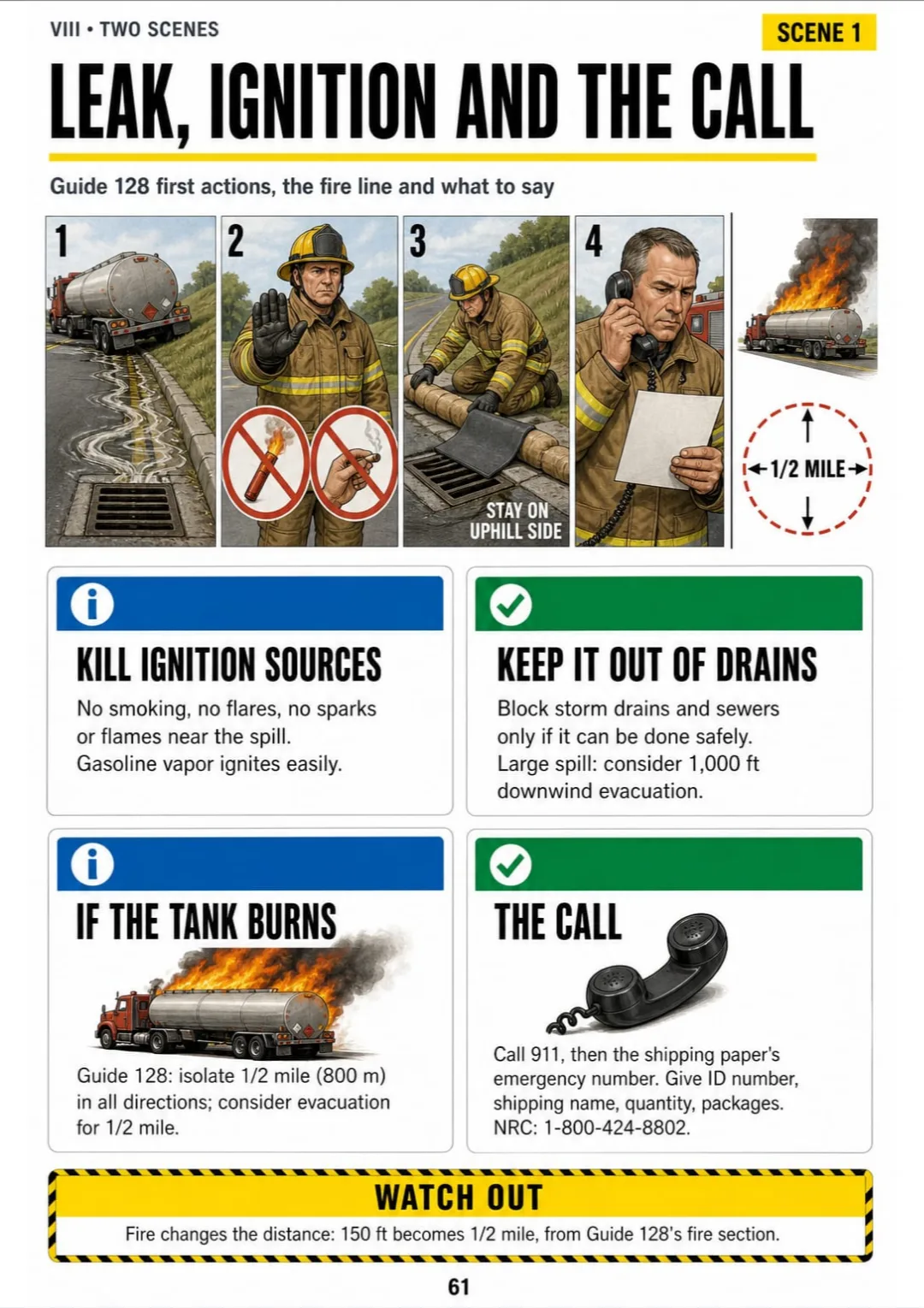
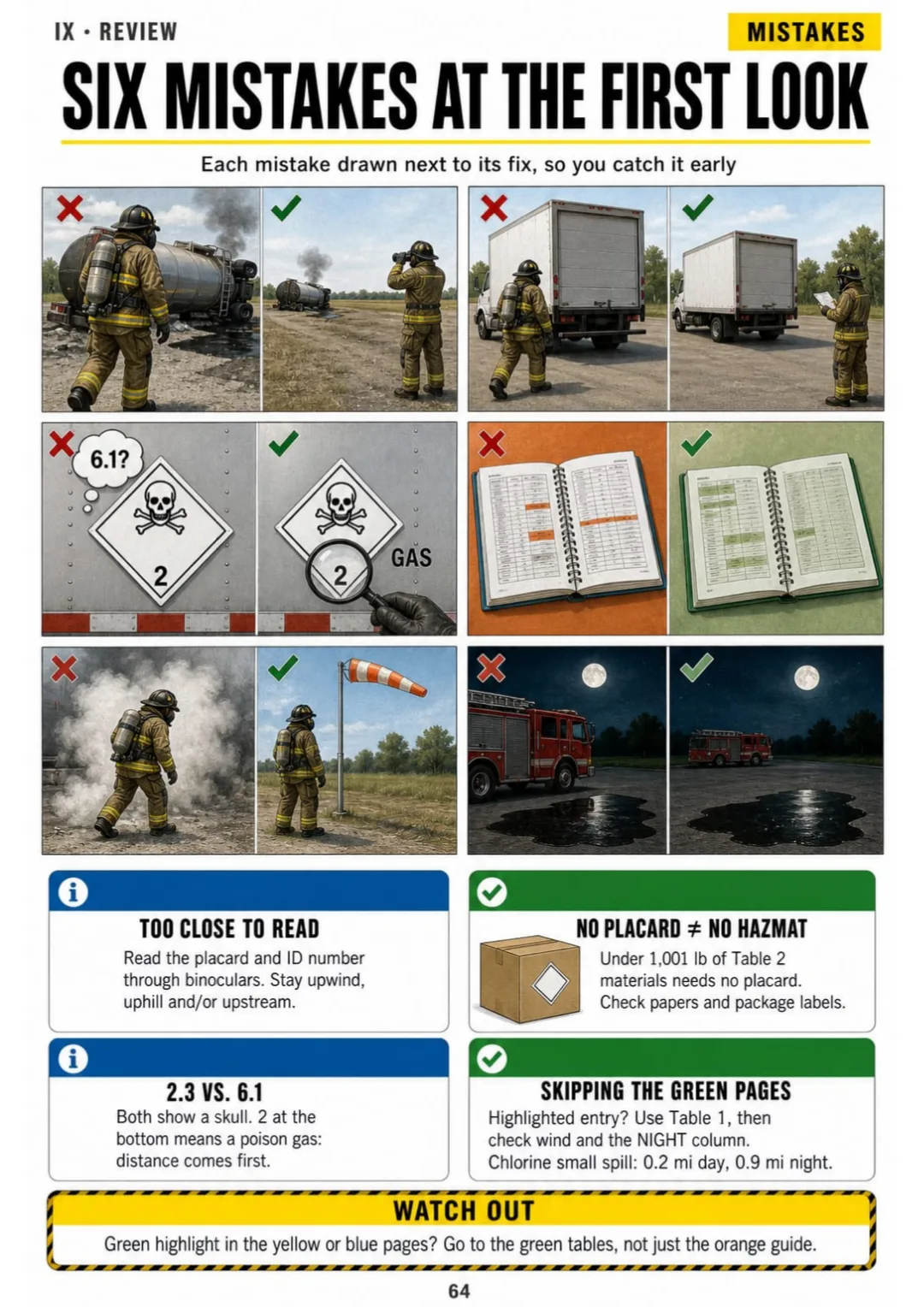
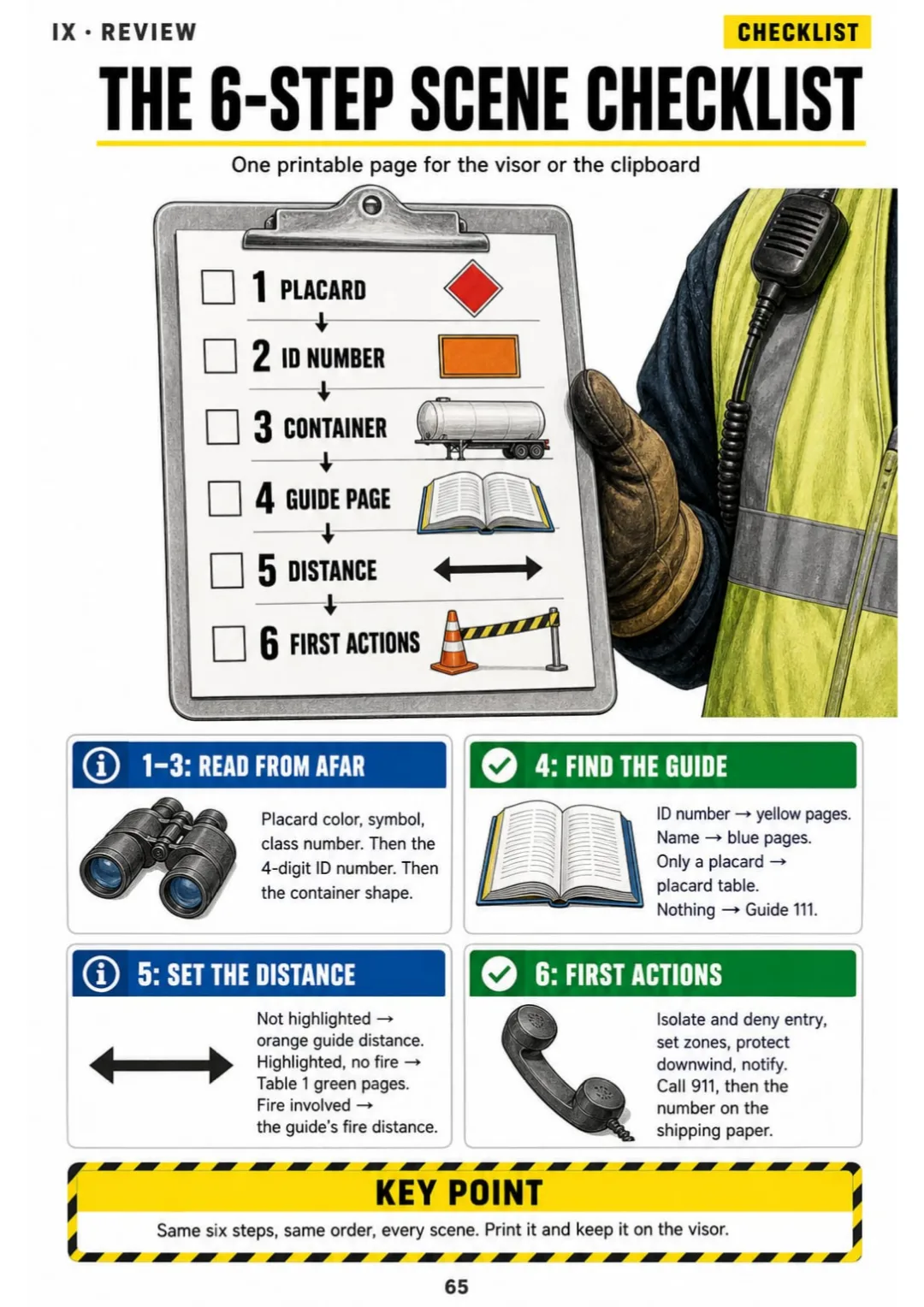
Each page has one big drawing and a box with the colors, numbers and steps you need to know:

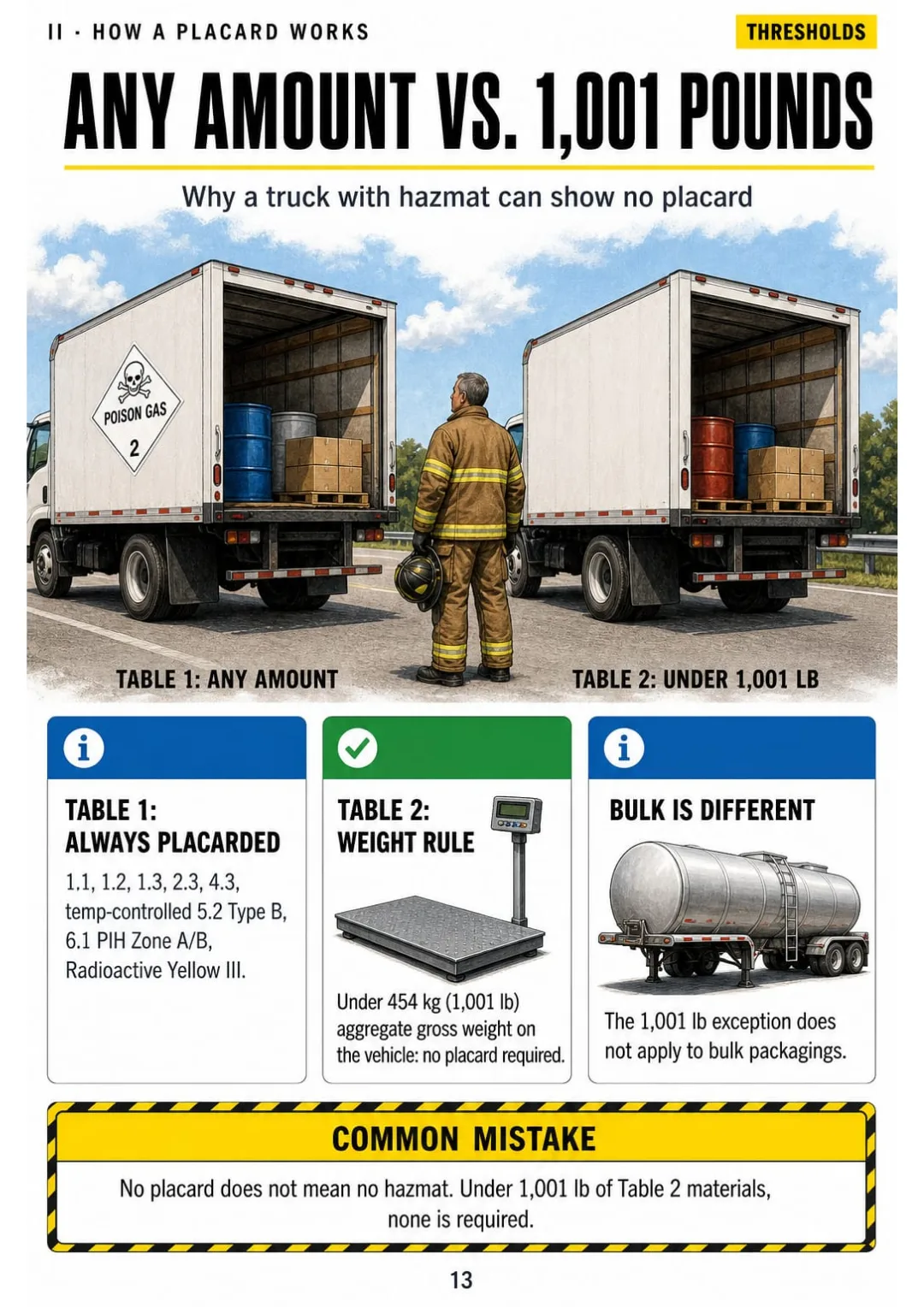
Table 1 materials: placard in any amount. Table 2: only from 1,001 lb.
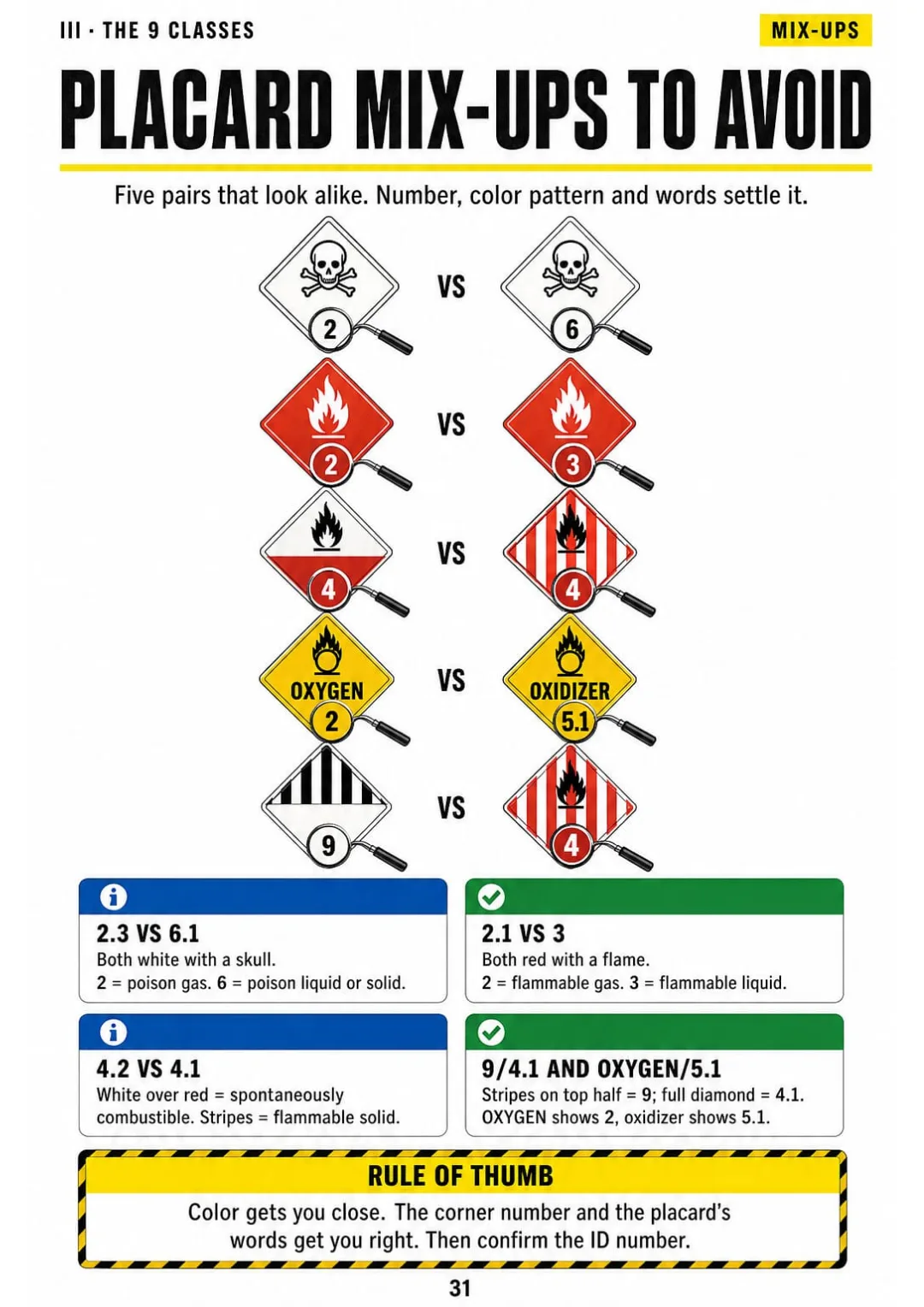
2.3 vs 6.1, 2.1 vs 3, 4.2 vs 4.1, 5.1 vs OXYGEN, 9 vs 4.1.
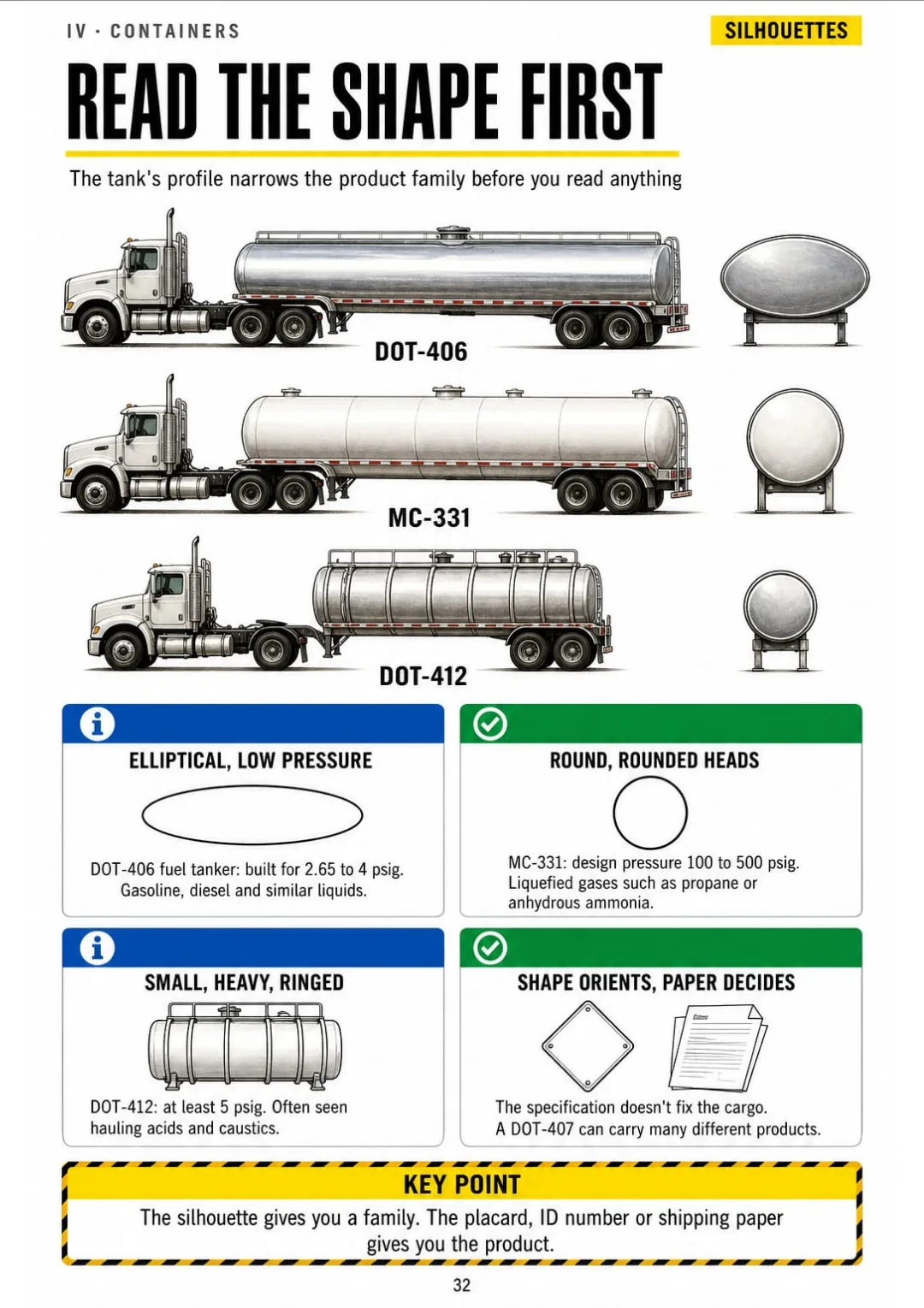
3 highway tank silhouettes: elliptical = low pressure, round with rounded heads = 100–500 psig gas
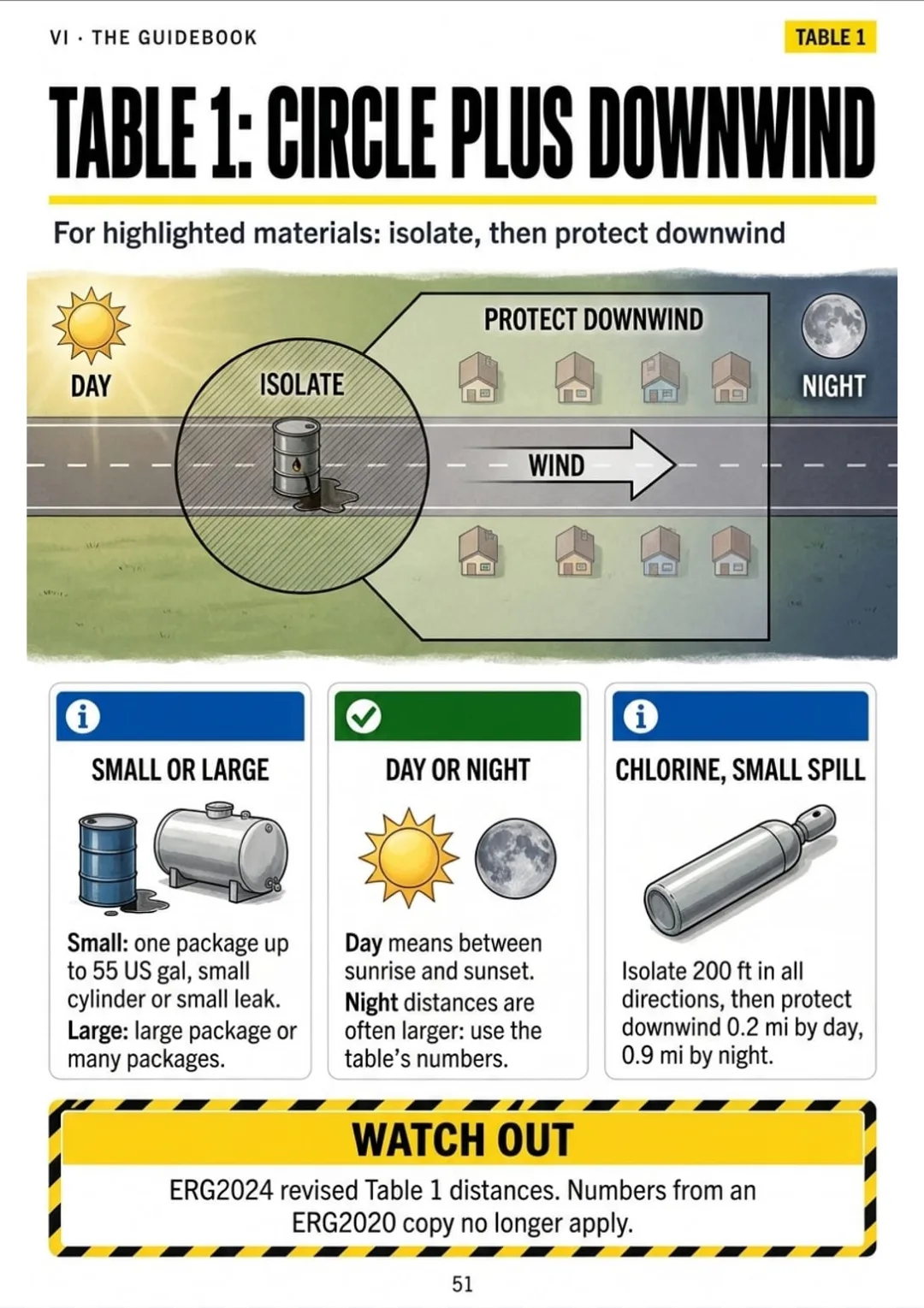
Table 1: isolation circle plus downwind zone, small vs large spill, day vs night
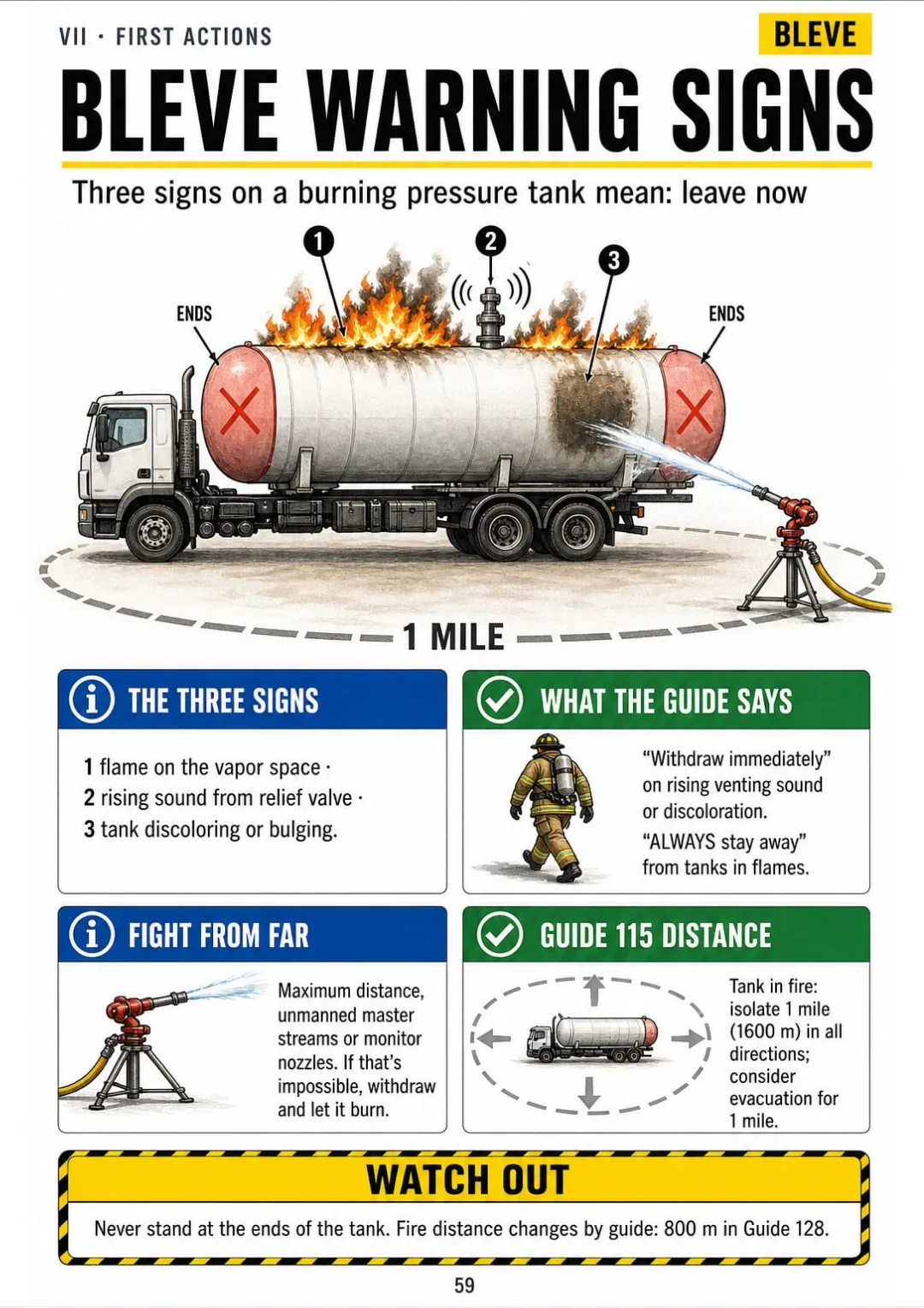
BLEVE signs: flame on vapor space, rising relief valve sound, discoloration; Guide 115 isolates 1 mile
Guide 128 leak actions: no ignition sources, protect drains, 1/2 mile if the tank burns.
Chlorine, small spill: protect 0.2 mi downwind by day, 0.9 mi at night.
Placard → ID number → container → guide page → distance → first actions.

Swipe to see more →

These are real pages from the book. The table of contents is the full one: 9 parts and 62 topics.

The Problem Isn't You. It's How It Was Explained.

You pull up on a tank truck lying on its side, a quarter mile out. The placard is too far to read, but the tank shape is right there in your windshield.

Low pressure liquid or pressurized gas? You read about cargo tanks once, in paragraphs full of spec numbers and wall thicknesses. None of those paragraphs looked like the tank in front of you.

3 highway tank silhouettes: elliptical = low pressure, round with rounded heads = 100–500 psig gas

In this book that tank gets one page: six highway tank silhouettes drawn side by side. Elliptical means low pressure. Round with rounded heads means a 100–500 psig gas tank.

The rest works the same way: the 9 hazard classes, the placards that look alike, the guidebook's green pages, the BLEVE warning signs. Each one has its own page.

You see the shape, you know the product family, and you know what to read next and how far back to start, before the placard is even legible.

COMPARE FOR YOURSELF

Same Topic, Two Ways to Learn It

THIS
  • The manual: line after line
  • Placard mix-ups explained only in words
  • You get to the scene still unsure
Responders should note that certain placards present similar visual characteristics which may result in misidentification at a distance. Division 2.3 (Poison Gas) and Division 6.1 (Poison) both display a skull-and-crossbones symbol on a white background, differing principally in the number shown in the bottom corner. Likewise, Division 2.1 and Class 3 placards are both red with a flame symbol. Division 4.2 features a white upper half and a red lower half, whereas Division 4.1 displays vertical red and white stripes; further confusion may arise between Division 5.1 and the OXYGEN placard.
FOR THIS
  • Each look-alike pair in one drawing
  • The class numbers side by side in a box
  • You see it and you get it
2.3 vs 6.1, 2.1 vs 3, 4.2 vs 4.1, 5.1 vs OXYGEN, 9 vs 4.1.
CONTENTS

Take a Look at the 9 Parts and 62 Topics

The sequence, how a placard works, the 9 hazard classes, containers from a distance, shipping papers, the guidebook page by page, first actions, two full scenes and a quick reference: 66 pages, all illustrated.

IThe Sequence Before Anything Else · pp. 5-9
  1. Why You Go Blank at the Scene
  2. The 6-Step Sequence: Placard → ID Number → Container → Guide Page → Distance → First Actions
  3. Stop Far Out: Upwind, Uphill, Upstream
  4. What You Can Read Through Binoculars
  5. When the Placard Lies or Isn't There
IIHow a Placard Works · pp. 10-15
  1. Anatomy of a Placard
  2. The Color Code at a Glance
  3. Where the 4-Digit ID Number Goes
  4. Any Amount vs. 1,001 Pounds: Table 1 and Table 2 Materials
  5. The DANGEROUS Placard
  6. Placards, Labels and Special Markings
IIIThe 9 Hazard Classes, One per Page · pp. 16-31
  1. Class 1: Explosives and Their Six Divisions
  2. Division 2.1: Flammable Gas
  3. Division 2.2: Non-Flammable Gas and the Oxygen Placard
  4. Division 2.3: Poison Gas
  5. Class 3: Flammable vs. Combustible Liquid
  6. Division 4.1: Flammable Solid
  7. Division 4.2: Spontaneously Combustible
  8. Division 4.3: Dangerous When Wet
  9. Division 5.1: Oxidizer
  10. Division 5.2: Organic Peroxide
  11. Class 6: Poison and Infectious Substances
  12. Class 7: Radioactive
  13. Class 8: Corrosive
  14. Class 9: Miscellaneous
  15. Packing Groups I, II and III
  16. Placard Mix-Ups to Avoid
IVContainers From a Distance · pp. 32-40
  1. Read the Shape Before the Numbers
  2. MC-306 / DOT-406: The Fuel Tanker
  3. DOT-407 and DOT-412: Chemicals and Corrosives
  4. MC-331: Pressure Tank for Liquefied Gases
  5. MC-338 and Tube Trailers: Cold and High-Pressure Gases
  6. Rail Tank Cars: Pressure vs. Non-Pressure
  7. Rail Car Stencils and Reporting Marks
  8. Intermodal Tanks, Totes, Drums and Cylinders
  9. Fixed Sites and Pipelines: The 704 Diamond and Pipeline Markers
VShipping Papers and Who to Call · pp. 41-44
  1. Where the Shipping Papers Are
  2. What to Read on the Papers
  3. Who to Call and What to Have Ready
  4. When You Have Nothing: No Placard, No Papers
VIThe Guidebook, Page by Page · pp. 45-54
  1. Map of the Guidebook: White, Yellow, Blue, Orange, Green
  2. Yellow Pages: From ID Number to Guide
  3. Blue Pages: From Name to Guide
  4. Only a Placard? The Placard Table and Guide 111
  5. How an Orange Guide Is Laid Out
  6. Public Safety: Your First Isolation Distance
  7. Green Pages, Table 1: Isolation Plus Protective Action Distance
  8. Green Pages, Tables 2 and 3: Water-Reactive and the Six Big Gases
  9. Fire or No Fire: Which Distance Wins
  10. Reading Wind and Setting the Downwind Zone
VIIFirst Actions · pp. 55-59
  1. Isolate and Deny Entry
  2. Hot, Warm and Cold Zones
  3. Evacuate or Shelter in Place
  4. What Structural Gear Won't Do
  5. BLEVE Warning Signs on a Pressure Tank
VIIITwo Scenes, Start to Finish · pp. 60-63
  1. Scene 1, Part A: Tanker on Its Side on the Highway
  2. Scene 1, Part B: Leak, Ignition Risk and Notification
  3. Scene 2, Part A: Pressure Rail Car at a Grade Crossing
  4. Scene 2, Part B: Table 3 Distance, Night and Wind
IXReview and Quick Reference · pp. 64-66
  1. Frequent Mistakes at the First Look
  2. The 6-Step Scene Checklist
  3. All 9 Classes on One Page

One Page, One Topic, All Clear

Think of it this way:

You're first on scene. A tanker is on its side on the shoulder, the orange panel reads 1203, and someone has to decide where everybody stops.

In the book you open the page for that scene: the red Class 3 placard, the panel with 1203, the DOT-406 silhouette, Guide 128 and an isolation circle of at least 150 feet drawn on the road, with you upwind, and the larger downwind distance to consider if it's a big spill.

BLEVE signs: flame on vapor space, rising relief valve sound, discoloration; Guide 115 isolates 1 mile

Same for the rest: the guidebook's colored sections, the green-page tables, hot, warm and cold zones, BLEVE signs on a pressure tank. Each one on its own page.

Hazmat Placards Illustrated is 9 parts and 62 topics, all drawn, with two full scenes worked start to finish and a quick-reference checklist at the end.

What you see drawn, you don't have to memorize.

What's Inside Hazmat Placards Illustrated:

Ipp. 5-9

The Sequence Before Anything Else

Why you go blank, the 6-step sequence, stopping upwind, uphill and upstream, what binoculars show and what to do when the placard is wrong or missing.

IIpp. 10-15

How a Placard Works

Anatomy of a placard, the color code, where the 4-digit ID number goes, Table 1 vs. Table 2 materials, the DANGEROUS placard and other markings.

IIIpp. 16-31

The 9 Hazard Classes, One per Page

Every class and division on its own page, from explosives to Class 9, plus packing groups and the placard mix-ups to avoid.

IVpp. 32-40

Containers From a Distance

Tank shapes from a distance: fuel tankers, chemical and pressure tanks, cryogenic and tube trailers, rail cars and stencils, totes, drums, cylinders, fixed-site diamonds and pipeline markers.

Vpp. 41-44

Shipping Papers and Who to Call

Where the shipping papers are, what to read on them, who to call and what to do when you have nothing to go on.

VIpp. 45-54

The Guidebook, Page by Page

The colored sections, yellow and blue pages, the placard table, how an orange guide reads, isolation distances, the green-page tables, fire vs. no fire and reading the wind.

VIIpp. 55-59

First Actions

Isolate and deny entry, hot, warm and cold zones, evacuate or shelter in place, what structural gear won't do and BLEVE warning signs.

VIIIpp. 60-63

Two Scenes, Start to Finish

A tanker on its side on the highway and a pressure rail car at a grade crossing, solved from first sighting to first actions.

IXpp. 64-66

Review and Quick Reference

Frequent mistakes at the first look, the 6-step scene checklist and all 9 classes on one page.

At the end of the book: Two full scenes worked start to finish, a 6-step scene checklist and all 9 classes on one page.

Plus: 2 Free Books

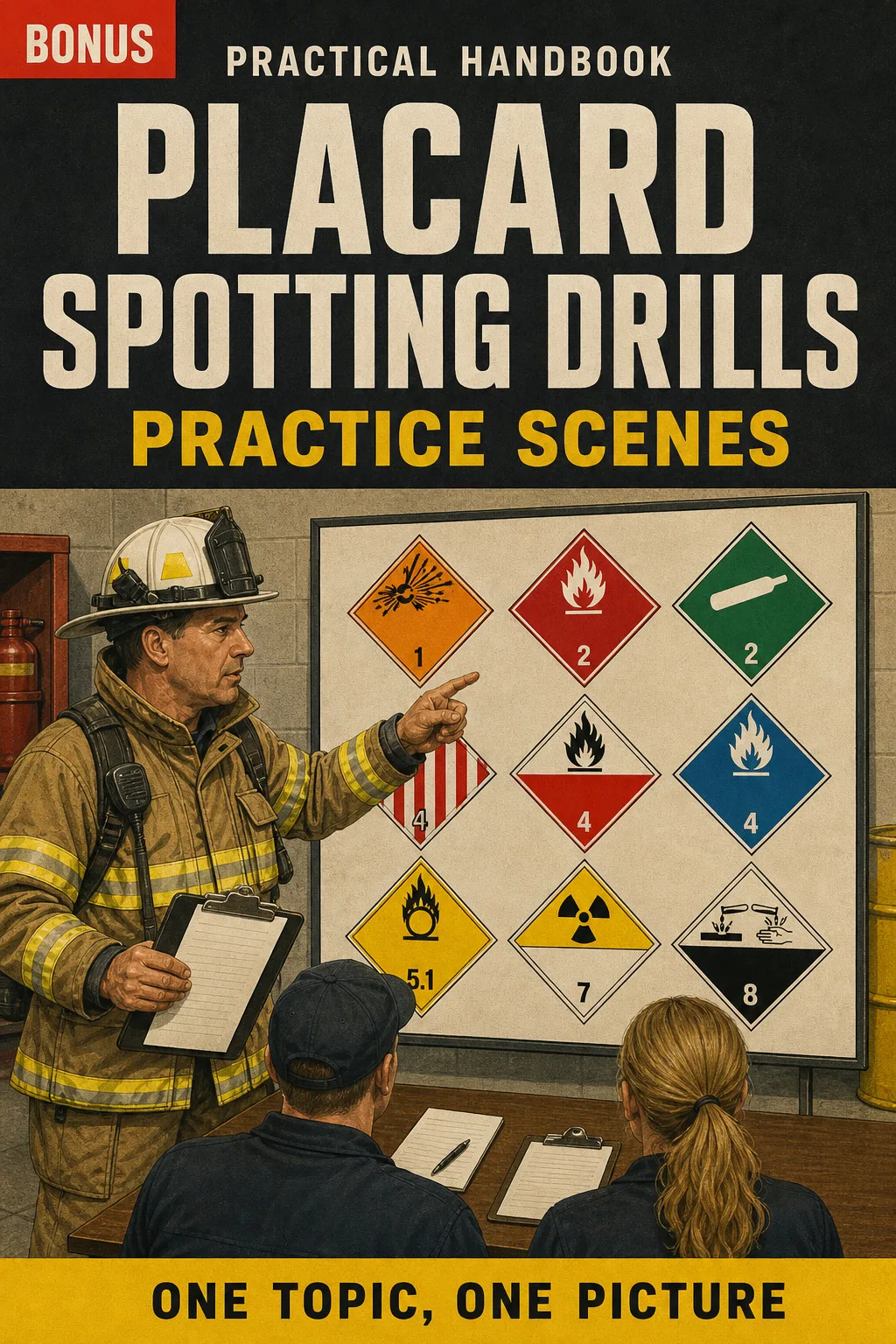
Placard Spotting Drills: Practice Scenes

BONUS 1: «Placard Spotting Drills: Practice Scenes»

Value on its own: US$ 17.90

Drawn roadside, rail and warehouse scenes where you name the class, find the ID number and pick the guide page, so the sequence feels familiar before a real call.

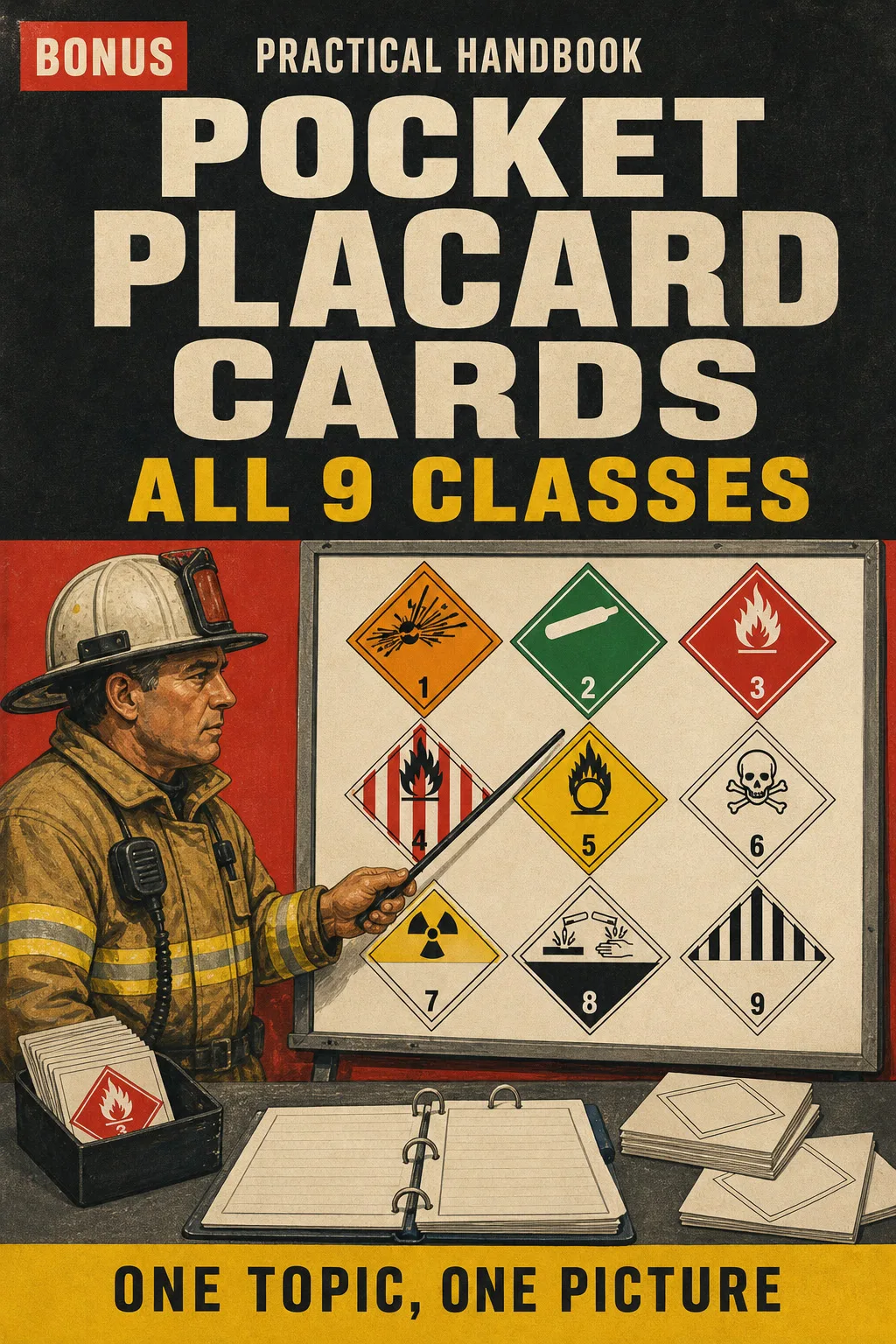
Pocket Placard Cards: All 9 Classes

BONUS 2: «Pocket Placard Cards: All 9 Classes»

Value on its own: US$ 14.90

Each hazard class on a printable card with its color, symbol and what to do first, so you can check it at a glance in the cab.

Hazmat Placards Illustrated with 2 Free Books

  • Hazmat Placards Illustrated: 66 illustrated pagesUS$ 63
  • BONUS 1: Placard Spotting Drills: Practice ScenesUS$ 17.90
  • BONUS 2: Pocket Placard Cards: All 9 ClassesUS$ 14.90
  • High-resolution PDF to printIncluded
Total value US$ 95.80
YOUR PRICE:
US$ 27
You save US$ 68.80
YES, I WANT HAZMAT PLACARDS ILLUSTRATED FOR US$ 27

📄 This is a digital PDF book sent to your email: nothing is printed or shipped.

Secure purchaseEncrypted payment30-day guarantee

PDF by email: We email you Hazmat Placards Illustrated as a PDF, together with the two free books. It's a single payment: no installments, no extra charges.

Who This Book Is For

New to the volunteer roster

New to the volunteer roster

You learn the placards, the tank shapes and the guidebook in one fixed order, with a drawing for every topic.

First due on the highway or at the plant gate

First due on the highway or at the plant gate

Patrol, tow or plant team: you know what to read from the cab and how far back to stop before anyone else arrives.

Years in the service

Years in the service

You review the classes, the green pages and the BLEVE signs at a glance, and keep a printed copy in the rig.

Everything You Get Today

US$ 95.80US$ 27
YES, I WANT HAZMAT PLACARDS ILLUSTRATED FOR US$ 27

📄 This is a digital PDF book sent to your email: nothing is printed or shipped.

30DAYS
GUARANTEE

30-Day Guarantee

Try Hazmat Placards Illustrated for 30 days, bonus books included.

We refund everything if the file won't open, if the book isn't what you see here, if you were charged twice or if the email doesn't arrive. Just email us.

You pay once. No subscriptions.

Frequently Asked Questions

Is it for me if I've been on the job for years and already carry the guidebook?

Yes. It doesn't replace the guidebook: it shows you how to move through it in the same order every time, with every placard and tank drawn. If you've been on the job for years, it works as a fast review of the classes, the look-alike placards, the green pages and the BLEVE signs.

Where does the content come from?

It's checked against the Emergency Response Guidebook 2024 (PHMSA, U.S. DOT), the Hazardous Materials Regulations in 49 CFR Parts 172–173 and the DOT cargo tank and tank car specifications. Fixed-site diamonds follow NFPA 704.

Is this official material?

No. It's an independent illustrated book. It isn't affiliated with or endorsed by PHMSA, DOT or NFPA, and it doesn't reproduce their tables.

Does it replace my department's training?

No. It doesn't replace the current guidebook, your agency's training or your local protocols. Always confirm distances in the current edition of the guidebook.

Are the practice scenes taken from an official test?

No. The practice scenes are written for this book. They aren't official questions from any exam, course or certification, and the book doesn't come with a certificate or count as training hours.

When and how do I get it?

The book and the 2 bonus books come as a PDF by email, to the address you enter at checkout.

Do I have to pay every month?

No. It's a one-time payment.

Can I have it on paper?

Yes. Print it at home or at a print shop and keep it in the rig.

How does the refund work?

You have 30 days. We refund everything if the file won't open, if the book isn't what you see on this page, if you were charged twice or if the email doesn't arrive: just email us.

Before You Close This Page

No more rereading pages that don't stick.

Every placard and tank shape, drawn and clear.

You get to the scene knowing where everything is.

Drawings make studying faster.

The book is right below.

One-time payment: US$ 27 · Guarantee: 30 days · PDF by email

YES, I WANT HAZMAT PLACARDS ILLUSTRATED FOR US$ 27

📄 This is a digital PDF book sent to your email: nothing is printed or shipped.